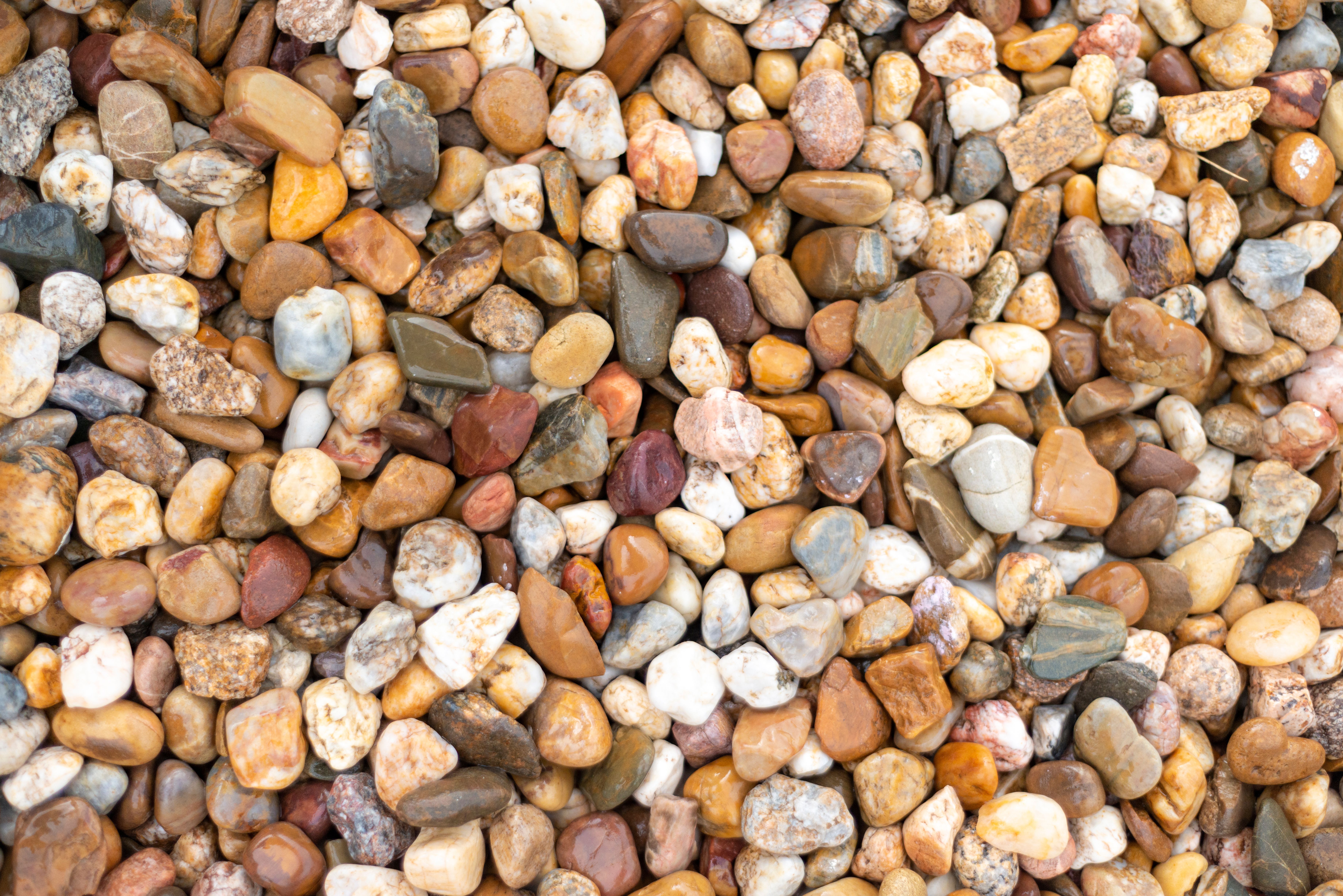
Gravel Calculator 2026 — The Driveway Calculation Everyone Gets Wrong
Gravel is one of the most deceptively simple landscaping materials to order and one of the most consistently over or under-ordered — because it is sold in two completely different units depending on your supplier, your region, and the type of gravel, and most homeowners do not know which unit they are working with until the delivery truck arrives. Some suppliers quote cubic yards. Others quote tons. A cubic yard of gravel and a ton of gravel are not the same quantity — in fact they can differ by 30% to 50% depending on the gravel type and moisture content. Ordering by the wrong unit or confusing the two when comparing supplier quotes is the single most common and costly gravel purchasing mistake homeowners make. The gravel calculator on CalcMint Pro calculates your project volume in cubic yards and converts to tons using material-specific weight factors — so you arrive at any supplier conversation with the right number in the right unit.
The Gravel Calculation Formula (Plain English)
Step 1 — Calculate your project area: Area = Length × Width (in feet for rectangular areas)
Step 2 — Convert depth to feet: Depth in feet = Desired depth in inches ÷ 12
Step 3 — Calculate volume in cubic feet: Volume = Area × Depth in feet
Step 4 — Convert to cubic yards: Cubic Yards = Cubic Feet ÷ 27
Step 5 — Convert to tons if needed: Tons = Cubic Yards × Material Weight Factor
Different gravel types have different densities — the weight factor per cubic yard varies significantly by material type as shown in the table below.
Example — 60ft × 12ft driveway, 4-inch depth of pea gravel: Depth in feet: 4 ÷ 12 = 0.333 feet Volume = 60 × 12 × 0.333 = 239.8 cubic feet Cubic yards = 239.8 ÷ 27 = 8.88 cubic yards → order 9 cubic yards Tons (pea gravel weight factor 1.4): 9 × 1.4 = 12.6 tons
Gravel Weight Factors by Material Type
This table is the critical reference that separates accurate from inaccurate gravel orders — weight per cubic yard varies significantly between materials.
| Gravel Type | Weight per Cubic Yard | Tons per Cubic Yard | Common Uses |
|---|---|---|---|
| Pea gravel | 2,800 to 3,000 lbs | 1.4 to 1.5 tons | Driveways, paths, landscaping |
| Crushed stone (#57) | 2,700 to 2,900 lbs | 1.35 to 1.45 tons | Driveways, drainage, base layers |
| Crushed limestone | 2,600 to 2,800 lbs | 1.3 to 1.4 tons | Driveways, paths, base material |
| River rock | 2,800 to 3,200 lbs | 1.4 to 1.6 tons | Decorative landscaping, drainage |
| Lava rock | 1,200 to 1,500 lbs | 0.6 to 0.75 tons | Decorative beds, lightweight |
| Decomposed granite | 2,700 to 2,900 lbs | 1.35 to 1.45 tons | Paths, patios, driveway surface |
| Marble chips | 2,700 to 3,000 lbs | 1.35 to 1.5 tons | Decorative landscaping |
| Sand (for comparison) | 2,600 to 3,000 lbs | 1.3 to 1.5 tons | Base layers, concrete mixing |
| Topsoil (for comparison) | 2,000 to 2,500 lbs | 1.0 to 1.25 tons | Garden beds, lawn repair |
The key insight from this table: Lava rock weighs approximately half what standard gravel weighs per cubic yard — ordering 5 cubic yards of lava rock and 5 cubic yards of pea gravel produces vastly different tonnage figures. If your supplier quotes by the ton and you calculated by volume without accounting for material density you will either significantly over or underpay and receive either more or less material than you planned for.
Recommended Gravel Depth by Application
Depth is the second most important variable after material type — and the right depth varies dramatically by use case.
| Application | Recommended Depth | Notes |
|---|---|---|
| Decorative landscape beds | 2 to 3 inches | Enough to suppress weeds with landscape fabric below |
| Garden path (foot traffic only) | 3 to 4 inches | 2 inch compacted base plus 2 inch surface layer |
| Residential driveway (passenger cars) | 4 to 6 inches | In two layers — 4 inch compacted base, 2 inch surface |
| Heavy vehicle driveway | 6 to 8 inches | Commercial vehicles, delivery trucks, RVs |
| French drain (drainage trench) | Fill to top | Trench depth determines material — typically 12 to 24 inches |
| Patio base layer (under pavers) | 4 to 6 inches | Compacted crushed stone as sub-base for pavers |
| Playground safety surfacing | 6 to 12 inches | Pea gravel only — no sharp crushed stone |
| Under concrete slabs | 4 inches | Compacted crushed stone base improves drainage and reduces cracking |
Gravel Depth Reference Table — How Much You Need
At the most common 4-inch depth for driveways and paths. Add the material weight factor for your specific gravel type to convert cubic yards to tons.
| Area Size | Cubic Feet | Cubic Yards | Approx Tons (pea gravel) |
|---|---|---|---|
| 10ft × 10ft | 33.3 | 1.23 | 1.7 tons |
| 20ft × 10ft | 66.7 | 2.47 | 3.5 tons |
| 30ft × 10ft | 100.0 | 3.70 | 5.2 tons |
| 40ft × 12ft (single driveway) | 160.0 | 5.93 | 8.3 tons |
| 60ft × 12ft (single driveway) | 240.0 | 8.89 | 12.4 tons |
| 60ft × 20ft (double driveway) | 400.0 | 14.81 | 20.7 tons |
| 100ft × 12ft (long driveway) | 400.0 | 14.81 | 20.7 tons |
| 200ft × 12ft (rural driveway) | 800.0 | 29.63 | 41.5 tons |
Long rural driveways at the bottom of this table represent multi-truck delivery orders — confirming your weight estimate in advance prevents the expensive scenario of a partially completed driveway because your material estimate was short by an entire truck load.
How to Use the CalcMint Pro Gravel Calculator
Step 1 — Enter your project dimensions. Length and width in feet for rectangular areas. For irregularly shaped driveways or paths break the area into rectangular sections, calculate each separately, and sum the results.
Step 2 — Enter your desired depth. Input in inches — the most practical unit for depth specification. The calculator converts to feet internally.
Step 3 — Select your gravel type. The calculator applies the correct weight factor for your material — critical for accurate ton conversion when comparing supplier quotes or ordering by weight.
Step 4 — View results in cubic yards and tons simultaneously. Both units display so you can match whichever unit your supplier quotes and compare multiple supplier quotes accurately regardless of which unit they use.
Step 5 — Add a 10% waste buffer. The calculator includes an optional waste buffer for irregular edges, settling, and the practical reality that spread material never covers area as perfectly uniformly as theoretical calculations assume.
The Tons vs Cubic Yards Problem — A Detailed Explanation
This is the confusion that costs homeowners money on almost every first-time bulk gravel order. Here is exactly how it plays out.
Scenario: A homeowner calculates they need 8 cubic yards of crushed limestone for a driveway extension. They call two suppliers.
Supplier A quotes $45 per cubic yard → 8 yards × $45 = $360 Supplier B quotes $62 per ton → homeowner thinks "8 units × $62 = $496, Supplier A is cheaper"
What actually happened: 8 cubic yards of crushed limestone at 1.35 tons per cubic yard = 10.8 tons Supplier B cost: 10.8 tons × $62 = $669.60
Supplier A at $360 for cubic yards was genuinely cheaper — but the homeowner could not compare the quotes directly without understanding that they were quoted in different units covering different quantities.
The comparison only works when both quotes are in the same unit. The gravel calculator shows both cubic yards and tons so you can convert any supplier's quote to the other unit and make an accurate comparison before committing.
Gravel Types for Specific Projects — Which to Choose
Driveways
Best choice: Crushed stone #57 or crushed limestone Angular crushed stone compacts and interlocks better than rounded pea gravel — it creates a more stable driveway surface that resists rutting under vehicle weight and spreads less under traffic. Most professional driveway installations use two layers — a 4-inch compacted base of #21A (crusher run) followed by a 2-inch surface layer of #57 crushed stone or pea gravel for appearance.
Pea gravel makes attractive driveway surfaces and is comfortable to walk on — but it moves under vehicle tires and migrates to lawn edges without edging installed to contain it. Expect to top up pea gravel driveways every 2 to 3 years as material scatters.
Landscaping and Garden Beds
Best choice: Pea gravel, river rock, or lava rock (decorative), decomposed granite (functional paths) Rounded decorative gravels create clean, low-maintenance garden bed surfaces that suppress weeds effectively when installed over landscape fabric. River rock in larger sizes (1.5 to 3 inches) provides excellent drainage while creating a natural aesthetic. Lava rock is significantly lighter than standard gravel making it easier to install manually and reducing the structural load on raised beds.
Drainage Applications
Best choice: Crushed stone #57 or #8, pea gravel for French drains Drainage applications require gravel with large void space between particles — angular crushed stone #57 provides excellent drainage capacity while also supporting the pipe in French drain installations. Avoid dense-graded materials for drainage — they compact too tightly and restrict water flow.
Patio and Path Base Layers
Best choice: Compactable gravel (crusher run, #21A) Under paver patios, concrete walkways, and stepping stone paths a compactable base layer is essential for structural stability. Crusher run — a mixture of crushed stone and stone dust — compacts to a near-solid base that resists settling and frost heaving better than clean stone alone. The stone dust fills the voids between particles, creating a dense, stable surface that clean crushed stone cannot achieve.
Gravel vs Mulch — Which Is Right for Your Landscape Beds
Many homeowners choose between gravel and organic mulch for their landscape beds — a decision with long-term maintenance implications beyond the immediate material calculation.
| Factor | Gravel | Organic Mulch |
|---|---|---|
| Upfront cost | Higher | Lower |
| Lifespan | Permanent (with occasional top-up) | 1 to 2 years before decomposition |
| Long-term cost | Lower (no annual reapplication) | Higher (annual purchases) |
| Weed suppression | Excellent (with landscape fabric) | Good (degrades over time) |
| Moisture retention | Poor | Excellent |
| Soil health | Neutral (no organic contribution) | Excellent (improves soil as it decomposes) |
| Heat absorption | High (reflects or absorbs heat near plants) | Low (insulates roots) |
| Maintenance | Occasional raking, top-up for migration | Annual reapplication |
| Best for | Low-water plants, xeriscape, permanent borders | Vegetable gardens, moisture-loving plants, tree rings |
For low-maintenance permanent borders around drought-tolerant plants in a hot climate gravel is often the more economical choice over a 10-year horizon despite higher initial material cost — eliminating the annual mulch purchase that the mulch calculator helps homeowners size correctly each spring.
Real-World Example: Tom's Driveway Project
Tom is installing a new gravel driveway from his garage to the street — 65 feet long and 12 feet wide. He plans a two-layer installation: a 4-inch compacted crusher run base and a 2-inch pea gravel surface layer.
Layer 1 — Crusher run base (4 inches): Volume = 65 × 12 × (4÷12) = 65 × 12 × 0.333 = 259.7 cubic feet Cubic yards = 259.7 ÷ 27 = 9.62 cubic yards → order 10.5 yards with 10% buffer Tons (crusher run weight factor 1.45): 10.5 × 1.45 = 15.2 tons
Layer 2 — Pea gravel surface (2 inches): Volume = 65 × 12 × (2÷12) = 65 × 12 × 0.167 = 130.3 cubic feet Cubic yards = 130.3 ÷ 27 = 4.83 cubic yards → order 5.3 yards with 10% buffer Tons (pea gravel weight factor 1.42): 5.3 × 1.42 = 7.5 tons
Total order: Crusher run: 10.5 cubic yards / 15.2 tons Pea gravel: 5.3 cubic yards / 7.5 tons
Tom called three suppliers — two quoted by cubic yard and one by ton. Using the gravel calculator he converted all three quotes to the same unit and identified the genuinely cheapest option — not the one with the lowest number, but the one with the lowest cost per equivalent volume. The supplier quoting $38 per cubic yard (total $595 for crusher run) beat the supplier quoting $28 per ton (15.2 tons × $28 = $425) only when he realised the tonnage quote was actually the better deal — something he would have missed entirely without the cubic yard to ton conversion.
Pro Tip — Get Quotes in Both Units From Every Supplier
When calling gravel suppliers for quotes always ask for the price in both cubic yards and tons — even if they initially quote only one unit. Reputable suppliers will convert readily and the request signals that you understand the material and are comparing multiple quotes accurately. Suppliers who resist giving you a quote in both units — or who seem uncertain about the conversion themselves — are a useful warning sign about the quality of their service more broadly.
Calculate your precise volume and weight requirements using the gravel calculator before making any calls — arriving with both your cubic yard number and your ton equivalent for your specific material type puts you in complete control of the purchasing conversation regardless of which unit any individual supplier prefers to quote.
Frequently Asked Questions
How much gravel do I need for a driveway?
A standard single-car driveway 60 feet long and 12 feet wide requires approximately 8.9 cubic yards of gravel at a 4-inch depth — equivalent to approximately 12.4 tons for standard pea gravel or crushed stone. Two-layer driveway installations use a 4-inch compacted crusher run base plus a 2-inch surface layer of pea gravel or crushed stone, requiring separate calculations for each layer. Always add a 10% waste buffer for settling, edge irregularities, and the material needed to achieve even coverage across the full driveway surface.
How many cubic yards of gravel do I need?
Multiply your area length by width by depth in feet then divide by 27 to get cubic yards. For a 20 by 10 foot area at 4 inches deep the calculation is 20 × 10 × 0.333 = 66.7 cubic feet divided by 27 equals 2.47 cubic yards. Always specify your depth in feet rather than inches before multiplying — converting 4 inches to 0.333 feet is the step most people miss when doing the calculation manually without a calculator.
How many tons of gravel do I need?
Multiply your calculated cubic yards by the weight factor for your specific gravel type. Standard pea gravel and crushed stone weigh approximately 1.35 to 1.5 tons per cubic yard. Lava rock is significantly lighter at 0.6 to 0.75 tons per cubic yard. A 9 cubic yard order of standard crushed limestone weighs approximately 12 to 12.6 tons. Always confirm the weight factor with your specific supplier since actual weights vary by moisture content and exact material composition.
What is the difference between gravel sold by the ton vs cubic yard?
Cubic yards measure volume while tons measure weight — and they are not interchangeable without knowing your material's density. One cubic yard of standard pea gravel weighs approximately 1.4 to 1.5 tons, meaning a 5 cubic yard order equals approximately 7 to 7.5 tons of the same material. Suppliers in different regions quote in different units making direct price comparison impossible without conversion. The gravel calculator on CalcMint Pro shows both cubic yards and tons simultaneously so you can compare any supplier quote accurately regardless of which unit they use.