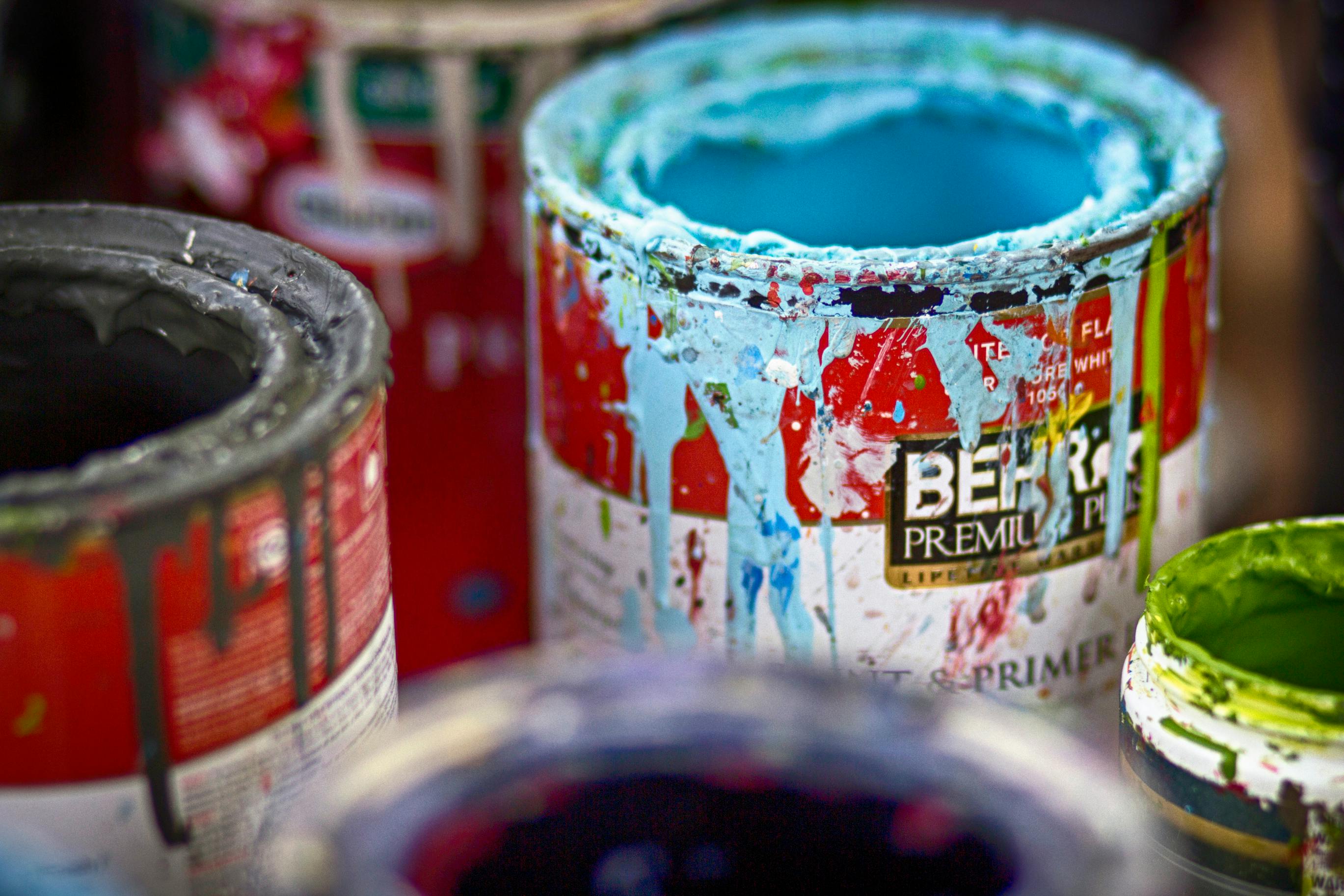
Walk into any paint aisle and the conversation with the store associate almost always ends the same way — "buy a bit extra just in case." That advice, repeated for decades, is why garages across the country are full of half-used paint cans that never get returned, never get used, and never get refunded. The actual amount of paint a room needs is not a guess — it is a precise calculation based on wall area, paint coverage rate, and number of coats. Get it right and you save money on every project. Get it wrong in the other direction and you stop halfway through a wall waiting for a colour-matched can that may never match perfectly. The paint calculator on CalcMint Pro calculates your exact gallon or litre requirement from your room dimensions — eliminating the guesswork that costs homeowners money in every direction.
The Paint Calculation Formula (Plain English)
Paint coverage is based on a simple relationship between area, coverage rate, and coats.
Step 1 — Calculate wall area: Wall Area = (Room Perimeter × Wall Height) − Door and Window Area
Step 2 — Calculate paint needed: Gallons Needed = (Wall Area ÷ Coverage Rate per Gallon) × Number of Coats
Standard coverage rate: One gallon of paint covers approximately 350 to 400 square feet for one coat on a primed, smooth surface. This is the figure printed on most paint cans — but it assumes ideal application conditions that real walls rarely match exactly.
Example — 12ft × 12ft room, 8ft ceiling, two coats:
Perimeter = (12 + 12 + 12 + 12) = 48 feet Wall area = 48 × 8 = 384 sq ft Subtract one door (20 sq ft) and two windows (15 sq ft each = 30 sq ft): 384 − 50 = 334 sq ft Paint needed for two coats = (334 ÷ 375) × 2 = 1.78 gallons
Round up to 2 gallons — paint is sold in fixed can sizes so the calculator rounds to the nearest practical purchase quantity, typically in gallon or quart increments.
Paint Coverage Reference Table by Room Size
Assuming 8-foot ceilings, standard door and window allowances, and two coats — the number most professional painters recommend for full opacity and even colour.
| Room Size | Wall Area (approx) | Gallons Needed (2 coats) | Litres Needed (2 coats) |
|---|---|---|---|
| 8' x 10' (small bedroom) | 256 sq ft | 1.4 gallons → buy 2 | 5.3 litres → buy 6 |
| 10' x 10' (bedroom) | 288 sq ft | 1.5 gallons → buy 2 | 5.8 litres → buy 6 |
| 12' x 12' (master bedroom) | 334 sq ft | 1.8 gallons → buy 2 | 6.7 litres → buy 8 |
| 12' x 15' (living room) | 382 sq ft | 2.0 gallons → buy 2 | 7.7 litres → buy 8 |
| 14' x 16' (large living room) | 432 sq ft | 2.3 gallons → buy 3 | 8.7 litres → buy 10 |
| 15' x 20' (open plan) | 520 sq ft | 2.8 gallons → buy 3 | 10.5 litres → buy 12 |
| 10' x 12' kitchen | 308 sq ft | 1.6 gallons → buy 2 | 6.2 litres → buy 6 |
| 5' x 8' bathroom | 182 sq ft | 1.0 gallon → buy 1 | 3.7 litres → buy 4 |
These figures assume one door and one to two standard windows per room. Rooms with more windows, built-in shelving, or unusual layouts need adjustment — which is exactly what the calculator handles automatically when you enter your specific door and window count.
How to Use the CalcMint Pro Paint Calculator
Step 1 — Enter your room dimensions. Input length, width, and ceiling height in feet or metres. The calculator computes total wall perimeter and area automatically.
Step 2 — Enter doors and windows. Standard door area is approximately 20 square feet. Standard window area is approximately 15 square feet. Enter the count of each and the calculator subtracts the correct area from your total.
Step 3 — Select number of coats. One coat works for minor refreshes using the same colour. Two coats is standard for new colours or significant colour changes — particularly when going from dark to light or light to dark. Three coats may be needed for bold colour changes like deep red or navy over white.
Step 4 — Select paint type and finish. Different finishes (matte, eggshell, satin, semi-gloss, gloss) and paint types (interior, exterior, primer) have slightly different coverage rates which the calculator adjusts for.
Step 5 — View your exact gallon or litre requirement. The result rounds up to the nearest practical can size so you buy exactly what you need without excessive leftover.
Why You Need More Paint Than the Basic Math Suggests
The simple area-divided-by-coverage-rate calculation gives a theoretical minimum. Real-world painting projects need more than this minimum for several practical reasons.
Surface texture and porosity. Smooth, primed drywall absorbs paint at the rate printed on the can. Textured walls, unprimed drywall, brick, stucco, and previously unpainted surfaces absorb significantly more paint — sometimes 20% to 40% more than smooth surfaces. A textured accent wall that looks like 100 square feet may consume paint as if it were 130 to 140 square feet.
Colour change magnitude. Going from a light colour to another light colour in one coat may achieve full coverage. Going from a dark colour to white, or white to a deep saturated colour, typically requires the full two coats plus possibly a tinted primer coat to prevent the old colour from showing through — adding 30% to 50% to your paint requirement.
Cutting in and edges. The paint used for cutting in around trim, ceilings, and corners is typically less efficient than roller application on open wall space — cutting in uses more paint per square foot covered because brushes apply a thicker, less even coat than rollers.
Application method. Spray application typically uses 20% to 30% more paint than roller application due to overspray loss — though it produces a faster, often smoother finish for large areas.
The CalcMint Pro paint calculator builds in a practical waste factor adjustment so your result already accounts for these real-world variables rather than the theoretical minimum that leaves you short.
Interior vs Exterior Paint Calculations
Exterior painting calculations follow the same fundamental formula but with different practical considerations.
Exterior coverage rates are typically lower — 300 to 350 square feet per gallon compared to 350 to 400 for interior — because exterior surfaces are usually rougher (siding texture, stucco, brick) and exterior paint formulations are typically thicker for weather resistance.
Exterior calculations need to account for: Soffit and fascia area (often calculated separately from wall area) Trim area around windows and doors (different colour, different calculation) Multiple stories (a two-storey house has roughly double the wall area of a single-storey house of the same footprint) Surface condition (chalky, weathered siding absorbs significantly more paint than well-maintained surfaces)
Typical exterior house paint requirements by home size:
| Home Size | Approximate Exterior Wall Area | Gallons Needed (2 coats) |
|---|---|---|
| 1,200 sq ft single storey | 1,400 sq ft | 7-8 gallons |
| 1,800 sq ft single storey | 1,900 sq ft | 9-10 gallons |
| 2,000 sq ft two storey | 2,600 sq ft | 12-14 gallons |
| 2,500 sq ft two storey | 3,200 sq ft | 15-17 gallons |
| 3,000 sq ft two storey | 3,800 sq ft | 18-20 gallons |
Choosing the Right Paint Finish for Each Room
Paint finish affects durability, cleanability, and light reflection — choosing correctly prevents both performance problems and unnecessary repainting.
| Finish | Sheen Level | Best For | Avoid For |
|---|---|---|---|
| Flat/Matte | None | Ceilings, low-traffic adult bedrooms | Kitchens, bathrooms, kids' rooms |
| Eggshell | Low | Living rooms, dining rooms, hallways | High-moisture areas |
| Satin | Medium | Kitchens, bathrooms, kids' rooms, trim | Rooms wanting a flat, no-shine look |
| Semi-gloss | Medium-high | Trim, doors, cabinets, bathrooms | Large wall areas (shows imperfections) |
| Gloss | High | Doors, furniture, high-durability trim | Any large wall surface |
Higher-sheen finishes are more durable and easier to clean — important for kitchens, bathrooms, and high-traffic hallways — but they also show surface imperfections like uneven drywall taping more visibly than flat finishes. This is why ceilings, which viewers see at an angle rather than head-on, almost universally use flat finish regardless of the wall finish chosen.
Real-World Example: Sarah's Living Room Repaint
Sarah is repainting her living room — 15ft × 18ft with 9-foot ceilings, going from a beige colour to a deep navy blue. The room has one door, three windows, and a fireplace with a mantel she will not paint over.
Wall area calculation: Perimeter = (15+15+18+18) = 66 feet Wall area = 66 × 9 = 594 sq ft Subtract door (20 sq ft) + 3 windows (45 sq ft) + fireplace surround (unpainted, 25 sq ft) = 594 − 90 = 504 sq ft
Paint needed: Because she is going from light beige to deep navy — a major colour change — she needs a grey-tinted primer coat plus two coats of navy paint.
Primer: 504 ÷ 375 = 1.34 gallons → buy 2 gallons Navy paint (2 coats): (504 ÷ 350) × 2 = 2.88 gallons → buy 3 gallons (navy has a slightly lower coverage rate due to deep pigment concentration)
Total purchase: 2 gallons primer + 3 gallons navy paint
Using the paint calculator Sarah avoided the common mistake of buying navy paint alone without budgeting for primer — which would have left her with visible beige showing through after two coats and an unplanned return trip to the store mid-project.
Pro Tip — Always Buy One Extra Quart, Never an Extra Gallon
The most cost-effective insurance against running short is buying one extra quart of your exact custom-mixed colour rather than rounding your gallon purchase up further. A quart costs significantly less than a gallon and covers approximately 80 to 100 square feet — enough to complete an unexpectedly large area or touch up mistakes without the expense of an unnecessary extra gallon sitting unused in your garage.
Keep your paint store receipt with the exact colour formula code — most paint stores can remix your exact colour years later from this code, meaning you do not need to stockpile excess paint just to ensure future colour matching. Calculate your precise need using the paint calculator, buy that amount plus one quart for touch-ups, and keep the formula code on file instead of excess cans.
Frequently Asked Questions
How much paint do I need for a 12x12 room?
A 12x12 room with 8-foot ceilings has approximately 384 square feet of wall area before subtracting doors and windows — typically reducing to around 334 square feet of paintable surface. For two coats this requires approximately 1.8 gallons of paint, which rounds up to a 2-gallon purchase. The exact amount depends on the number of doors and windows, which the paint calculator on CalcMint Pro accounts for automatically based on your specific room layout.
How many square feet does a gallon of paint cover?
One gallon of paint typically covers 350 to 400 square feet for one coat on a smooth, primed surface. Textured surfaces, unprimed drywall, and porous materials reduce this coverage by 20% to 40%. Exterior paint generally covers less per gallon — 300 to 350 square feet — due to rougher surface textures and thicker paint formulations designed for weather resistance. Always check the specific coverage rate printed on your chosen paint can as formulations vary by brand and product line.
Do I need two coats of paint or just one?
Two coats is the standard recommendation for most painting projects, particularly when changing colours or painting over a different base colour. One coat may suffice only when applying the same colour as a touch-up or refresh on a surface in good condition. Significant colour changes — especially light to dark or dark to light — often require a tinted primer coat in addition to two topcoats to achieve full, even coverage without the original colour showing through.
How much paint do I need for a house exterior?
A typical 2,000 square foot two-storey home requires approximately 12 to 14 gallons of exterior paint for two coats, while a 1,200 square foot single-storey home requires approximately 7 to 8 gallons. Exterior calculations should account for soffits, fascia, and trim separately from main wall area since these often use different paint or colours. Surface condition matters significantly — chalky or weathered siding can increase paint consumption by 20% or more compared to well-maintained surfaces.