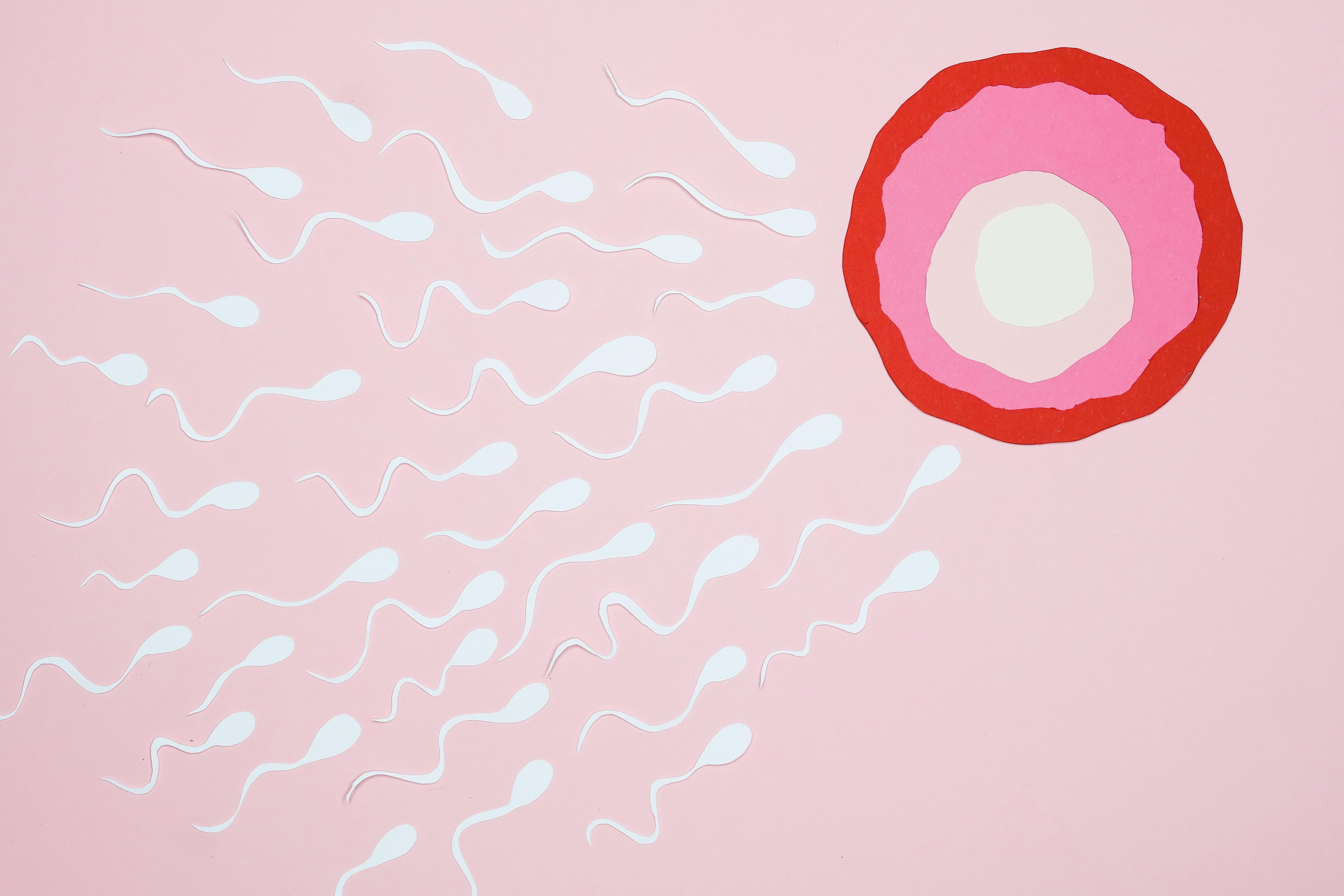
The window during which conception is possible in any given menstrual cycle is remarkably narrow — approximately six days. Five days before ovulation when sperm can survive in the female reproductive tract waiting for egg release, the day of ovulation itself, and potentially one day after. Outside this window pregnancy from unprotected intercourse is essentially impossible regardless of frequency. Most women trying to conceive either do not know when this window occurs or have only a vague sense of it based on the midpoint-of-cycle assumption that is accurate for women with textbook 28-day cycles and increasingly inaccurate for everyone else. The ovulation calculator on CalcMint Pro estimates your ovulation date and fertile window from your cycle length — giving you the specific days that matter most for conception planning.
How Ovulation Works — The Biology Behind the Window
Understanding the biology of ovulation transforms the calculator result from an abstract date into a meaningful physiological event you can recognise and act on.
The menstrual cycle is divided into two phases separated by ovulation.
The Follicular Phase — from day 1 of menstruation to ovulation: The pituitary gland releases Follicle Stimulating Hormone (FSH) which stimulates follicles in the ovaries to develop. One follicle — the dominant follicle — grows larger than the others and produces increasing amounts of estrogen. Rising estrogen thickens the uterine lining (endometrium) in preparation for a potential embryo. When estrogen reaches a threshold level it triggers a surge of Luteinising Hormone (LH) from the pituitary — the LH surge triggers ovulation approximately 24 to 36 hours later.
The follicular phase is the variable part of the cycle — it lasts approximately 10 to 21 days depending on the individual and can vary between cycles in the same woman. This variability is why ovulation does not reliably occur at the midpoint of the cycle for most women.
Ovulation: The dominant follicle ruptures and releases a mature egg into the fallopian tube. The egg survives for approximately 12 to 24 hours — this is the only window during which fertilisation is possible. If not fertilised within this window the egg disintegrates.
The Luteal Phase — from ovulation to menstruation: The ruptured follicle transforms into the corpus luteum which produces progesterone — the hormone that maintains the uterine lining and supports early pregnancy if conception occurs. The luteal phase is remarkably consistent across women and cycles — almost universally 12 to 16 days in length. If fertilisation does not occur the corpus luteum degenerates, progesterone falls, and menstruation begins approximately 14 days after ovulation.
The critical insight from this biology: Because the luteal phase is consistent at approximately 14 days, ovulation always occurs approximately 14 days before the next period — regardless of cycle length. For a 28-day cycle this means ovulation on day 14. For a 35-day cycle this means ovulation on day 21. For a 24-day cycle this means ovulation on day 10. The midpoint assumption — that ovulation occurs at the midpoint of the cycle — is only accurate for 28-day cycles.
How the Ovulation Calculator Works
The calculation starts from the expected start of the next period and counts backward 14 days.
Formula: First day of last menstrual period + Cycle length − 14 days = Estimated ovulation date
Fertile window: Ovulation date minus 5 days to ovulation date plus 1 day = 6-day fertile window
Example — 28-day cycle, LMP January 1: Next period expected: January 29 Ovulation: January 29 − 14 = January 15 Fertile window: January 10 to January 16
Example — 35-day cycle, LMP January 1: Next period expected: February 5 Ovulation: February 5 − 14 = January 22 Fertile window: January 17 to January 23
Example — 24-day cycle, LMP January 1: Next period expected: January 25 Ovulation: January 25 − 14 = January 11 Fertile window: January 6 to January 12
The three-week difference in fertile window timing between a 24-day and 35-day cycle illustrates precisely why cycle length is the critical input — and why the generic day 14 ovulation assumption fails so dramatically for women with non-standard cycles.
Cycle Length and What It Means for Ovulation Timing
| Cycle Length | Estimated Ovulation Day | Peak Fertility Days |
|---|---|---|
| 21 days | Day 7 | Days 2 to 8 |
| 24 days | Day 10 | Days 5 to 11 |
| 26 days | Day 12 | Days 7 to 13 |
| 28 days | Day 14 | Days 9 to 15 |
| 30 days | Day 16 | Days 11 to 17 |
| 32 days | Day 18 | Days 13 to 19 |
| 35 days | Day 21 | Days 16 to 22 |
| 38 days | Day 24 | Days 19 to 25 |
Women with cycles outside the 26 to 32 day range are most commonly misled by generic day 14 advice. A woman with a 35-day cycle who times intercourse around day 14 is having sex approximately 7 days before her actual fertile window — and wondering why she is not conceiving despite trying consistently.
How to Use the CalcMint Pro Ovulation Calculator
Step 1 — Enter the first day of your last menstrual period. Use the first day of actual bleeding — not spotting. This is day 1 of your cycle.
Step 2 — Enter your average cycle length. If your cycle varies month to month use the average of your last three to six cycles. Cycle length is measured from the first day of one period to the first day of the next — not from end of bleeding to start of next period.
Step 3 — View your estimated ovulation date and fertile window. The calculator shows your likely ovulation date, your six-day fertile window, and the most fertile days within that window — typically the two days before ovulation and ovulation day itself where conception probability is highest.
Step 4 — Plan accordingly. For conception the most effective approach is intercourse every one to two days throughout the fertile window — particularly the three days immediately before and including the estimated ovulation date where conception probability peaks.
Step 5 — Track cycles over several months. A single calculation gives you an estimate. Tracking your period start dates over three to six months — using the calculator each cycle — produces increasingly accurate predictions as your personal cycle pattern becomes clear.
Signs of Ovulation — Physical Indicators to Confirm Your Window
The calculator provides an estimate based on cycle length. Physical signs of ovulation provide real-time confirmation — allowing women to identify their actual ovulation more precisely than any calendar calculation.
Basal Body Temperature (BBT): Resting body temperature rises by approximately 0.2°C to 0.5°C after ovulation due to progesterone release from the corpus luteum. This temperature rise persists through the luteal phase and drops back to baseline at menstruation. BBT must be measured first thing in the morning before any activity — even sitting up — using a basal thermometer accurate to 0.1°C. The temperature rise confirms ovulation has occurred — useful for retrospective tracking but does not predict ovulation in advance.
Cervical Mucus Changes: Cervical mucus changes predictably throughout the cycle in response to changing hormone levels. The most fertile mucus — around ovulation — is clear, stretchy, and resembles raw egg white. This fertile-quality mucus is easily identified and coincides with peak fertility. Mucus becomes thicker, cloudier, and less abundant after ovulation under progesterone influence. Monitoring cervical mucus daily provides prospective warning of approaching ovulation — typically two to four days in advance.
LH Surge — Ovulation Predictor Kits: Over-the-counter ovulation predictor kits (OPKs) detect the LH surge in urine — the hormonal signal that triggers ovulation approximately 24 to 36 hours later. A positive OPK result indicates ovulation is imminent — giving advance warning that allows timely intercourse. LH strips are widely available and relatively inexpensive — particularly if purchased in bulk online. For women with irregular cycles OPKs provide the most reliable confirmation of imminent ovulation beyond the calendar calculation.
Mittelschmerz: Approximately 20% of women experience a brief, localised pain or discomfort on one side of the lower abdomen at ovulation — called Mittelschmerz (German for middle pain). The pain is caused by follicle rupture and typically lasts from a few minutes to a few hours. It is a reliable ovulation indicator for women who experience it consistently.
Breast tenderness: Mild breast sensitivity or tenderness in the days around ovulation — driven by the estrogen surge preceding LH release — is a common but less specific indicator since breast tenderness also occurs premenstrually.
Cycle Irregularity — When the Calculator Is Less Reliable
The ovulation calculator assumes a consistent cycle length — producing estimates that become less reliable as cycle variability increases. Several conditions cause cycle irregularity that affects ovulation timing prediction.
Polycystic Ovary Syndrome (PCOS): PCOS is one of the most common causes of irregular cycles and irregular ovulation — affecting approximately 10% of women of reproductive age. Women with PCOS may have cycles ranging from 21 to 90+ days and may ovulate irregularly or not at all in some cycles. OPK testing is particularly valuable for women with PCOS — though LH levels can be elevated chronically in PCOS making OPK interpretation sometimes ambiguous. Fertility treatment consultation is appropriate for women with PCOS struggling to conceive after several months of trying.
Thyroid disorders: Both hypothyroidism (underactive thyroid) and hyperthyroidism (overactive thyroid) can disrupt menstrual cycle regularity and ovulation. Thyroid function testing is a standard early step in fertility evaluation for women with irregular cycles.
Stress and weight changes: Significant psychological stress, extreme exercise, and substantial weight loss or gain can all suppress ovulation — a protective mechanism that reduces fertility during physiologically challenging conditions. The hypothalamus — the brain region regulating reproductive hormones — responds to energy balance signals and stress hormones by reducing GnRH release, which cascades to reduced FSH and LH production and suppressed ovulation.
Women whose BMI falls below approximately 18.5 or above approximately 35 have higher rates of ovulation irregularity — underweight through hypothalamic suppression and severe obesity through hormonal dysregulation from excess adipose tissue. Understanding BMI context is useful here using the BMI calculator.
Perimenopause: From the late 30s onward — and particularly in the 40s — ovarian reserve declines and cycle length begins to vary more significantly. Perimenopause — the transition to menopause — is characterised by increasingly irregular cycles, variable ovulation timing, and eventually cessation of ovulation. Calendar-based ovulation prediction becomes progressively less reliable during this transition.
Conception Probability by Cycle Day — What the Research Shows
Research tracking conception rates relative to ovulation timing provides clear guidance on which days in the fertile window matter most.
A landmark study by Wilcox et al. published in the New England Journal of Medicine tracked conception rates relative to ovulation day confirmed by hormonal monitoring in a large cohort of women trying to conceive. Key findings:
| Days Relative to Ovulation | Conception Probability per Cycle |
|---|---|
| Day −5 (5 days before ovulation) | 10% |
| Day −4 (4 days before ovulation) | 16% |
| Day −3 (3 days before ovulation) | 14% |
| Day −2 (2 days before ovulation) | 27% |
| Day −1 (1 day before ovulation) | 31% |
| Day 0 (ovulation day) | 33% |
| Day +1 (1 day after ovulation) | 12% |
| Day +2 and beyond | Near zero |
The peak conception probability days are the two days before ovulation and ovulation day itself — days −2, −1, and 0 — where per-cycle pregnancy rates from single acts of intercourse reach 27% to 33%. This is also why the common advice to have intercourse on ovulation day alone is suboptimal — the egg survives only 12 to 24 hours while sperm deposited in the days before ovulation can survive five days in the fallopian tube waiting for egg release.
Practical recommendation: aim for intercourse on days −3, −2, −1, and 0 relative to estimated ovulation — every one to two days in the three to four days leading up to and including estimated ovulation day.
How Long Does It Take to Conceive — Setting Realistic Expectations
Understanding normal conception timelines reduces unnecessary anxiety and helps women identify when medical evaluation is appropriate.
| Age | Percentage Conceiving Within 3 Months | Percentage Conceiving Within 12 Months |
|---|---|---|
| Under 25 | ~75% | ~97% |
| 25 to 29 | ~70% | ~95% |
| 30 to 34 | ~60% | ~90% |
| 35 to 39 | ~50% | ~78% |
| 40 to 44 | ~30% | ~65% |
These figures assume regular unprotected intercourse timed appropriately to the fertile window. Couples not timing intercourse to the fertile window — particularly those using the generic day 14 assumption with non-28-day cycles — will see lower conception rates in practice simply because of missed fertile windows rather than any underlying fertility issue.
Current clinical guidelines recommend fertility evaluation after: 12 months of unprotected intercourse for women under 35 6 months for women 35 to 39 3 months for women 40 and over Immediately for women with known risk factors including irregular cycles, prior pelvic inflammatory disease, endometriosis, or prior chemotherapy
Nutrition and Lifestyle for Conception — Evidence-Based Recommendations
The preconception period — ideally three months before attempting conception — is the optimal time to optimise nutritional status for both fertility and early fetal development.
Folic acid: 400 micrograms per day minimum — ideally 600 to 800 micrograms — for at least one month before conception and through the first trimester. Folic acid prevents neural tube defects during the critical weeks 3 to 6 of fetal development — often before pregnancy is confirmed.
Iron: Adequate iron stores before conception prevent iron-deficiency anaemia during pregnancy when blood volume increases significantly. Women with heavy periods are at particular risk.
Vitamin D: Deficiency is associated with reduced fertility in both men and women and with adverse pregnancy outcomes. Most guidelines recommend supplementation to achieve adequate levels — particularly in northern latitudes with limited sun exposure.
Protein adequacy: Adequate protein intake supports egg quality and hormonal production. For women actively trying to conceive maintaining the protein targets from the protein intake calculator is a practical foundation for reproductive nutritional health.
Alcohol: Evidence suggests reducing alcohol consumption during conception attempts — both because of direct effects on egg quality and because early pregnancy confirmation often happens several weeks after conception, by which time alcohol consumed while unknowingly pregnant has already occurred.
Body weight: Both significantly underweight (BMI below 18.5) and significantly overweight (BMI above 30) are associated with reduced fertility through different hormonal mechanisms. Achieving a BMI closer to the normal range before attempting conception improves fertility outcomes and reduces pregnancy complication risk.
Real-World Example: How Cycle Tracking Changed Sofia's Experience
Sofia and her partner had been trying to conceive for four months with no success. Her cycle averaged 32 days. Based on generic advice she had been timing intercourse around day 14 — the standard midpoint-of-cycle assumption.
She entered her data into the ovulation calculator. With a 32-day cycle her estimated ovulation day was day 18 — four days later than day 14. Her fertile window was days 13 to 19.
She had been having intercourse around day 14 — which fell at the very start of her fertile window — and stopping by day 16. She was missing her two highest-probability conception days — days 16 to 18 — entirely.
She adjusted her timing based on the calculator result and confirmed with LH ovulation predictor strips that she was indeed surging around day 17 to 18. In the second cycle after adjusting her approach she conceived.
The calculator did not fix a fertility problem — she had no fertility issue. It corrected a timing error caused by applying a 28-day cycle assumption to a 32-day cycle. Four months of effort had been directed at the wrong days.
Pro Tip — Track Three Cycles Before Relying on the Calculator
A single calculation based on one remembered cycle length is useful but imperfect. Menstrual cycles vary between months — stress, illness, travel, and other factors shift ovulation timing by several days in individual cycles.
Tracking your period start date for three consecutive cycles — entering each into the ovulation calculator to see your ovulation estimate each time — builds a personalised pattern that accounts for your natural cycle variation. If your cycles consistently range from 29 to 33 days your fertile window spans a wider range than a single calculation suggests — and planning intercourse across this wider window rather than at a single predicted ovulation date maximises your probability of timing conception correctly in any given cycle.
For women whose cycles vary by more than 7 days between months OPK testing provides the most reliable real-time ovulation confirmation beyond any calendar calculation — identifying the actual LH surge regardless of which day it occurs in that specific cycle.
Published by James Carter | CalcMint Pro | Updated May 2026
Frequently Asked Questions
How do I calculate my ovulation date?
Ovulation occurs approximately 14 days before your next expected period — regardless of cycle length. To find your ovulation date add your average cycle length to the first day of your last period to get your next expected period date then subtract 14 days. For a 32-day cycle starting January 1 the next period is expected February 2 and ovulation is estimated around January 19. The ovulation calculator on CalcMint Pro does this calculation instantly and shows your complete six-day fertile window.
How many days after my period do I ovulate?
The number of days between your period and ovulation equals your cycle length minus 14. For a 28-day cycle ovulation occurs approximately 14 days after your period starts. For a 35-day cycle ovulation occurs approximately 21 days after your period starts. For a 24-day cycle ovulation occurs approximately 10 days after your period starts. The day of ovulation relative to menstruation varies significantly by cycle length — which is why generic day 14 advice fails for women with non-standard cycles.
What are the signs of ovulation?
The most reliable signs of ovulation are a positive ovulation predictor kit result indicating the LH surge approximately 24 to 36 hours before egg release, fertile-quality cervical mucus that is clear, stretchy, and resembles raw egg white appearing in the days before ovulation, and a basal body temperature rise of 0.2 to 0.5 degrees Celsius after ovulation confirming it has occurred. Approximately 20% of women also experience brief one-sided lower abdominal pain at ovulation called Mittelschmerz.
How long is the fertile window each cycle?
The fertile window is approximately six days per cycle — the five days before ovulation when sperm can survive in the reproductive tract and the day of ovulation itself. Conception probability peaks in the two days before ovulation and on ovulation day where per-cycle pregnancy rates from single acts of intercourse reach 27% to 33%. The day after ovulation and beyond have near-zero conception probability as the unfertilised egg disintegrates within 12 to 24 hours of release.