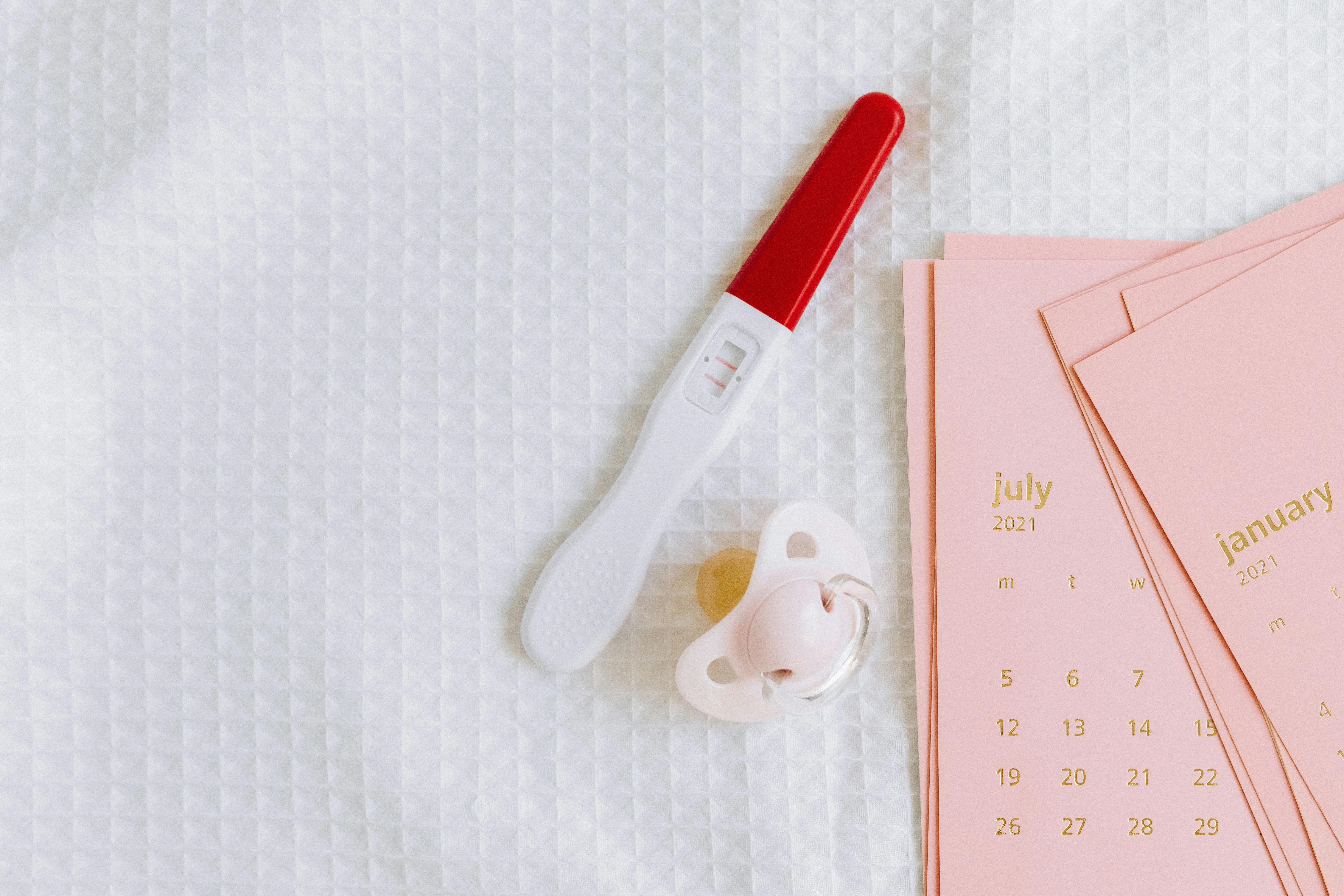
Only approximately 5% of babies are born on their calculated due date. Yet the due date — that single circled day on the calendar — becomes one of the most anticipated and emotionally significant numbers in any pregnancy. Understanding how it is calculated, what it actually represents statistically, and what happens in the weeks surrounding it transforms the due date from an anxiety-inducing deadline into the useful clinical landmark it was designed to be. The pregnancy due date calculator on CalcMint Pro estimates your due date, your current week of pregnancy, and your trimester milestones from your last menstrual period — the same method used in clinical practice worldwide. This guide explains every aspect of due date calculation, what the weeks and trimesters actually mean for development, and what the research says about when babies actually arrive.
How Due Dates Are Calculated — The Naegele's Rule
The standard method for calculating a pregnancy due date is Naegele's Rule — developed by German obstetrician Franz Karl Naegele in 1812 and still the foundation of clinical due date calculation over two centuries later.
The formula: First day of last menstrual period + 280 days = Estimated Due Date
280 days equals exactly 40 weeks — which is why pregnancy is described as approximately 40 weeks duration. Naegele's Rule assumes a 28-day menstrual cycle with ovulation occurring on day 14. It counts from the first day of the last menstrual period rather than from conception — which is why pregnancy duration counted this way includes approximately two weeks before conception actually occurred.
The plain English version: Take the first day of your last menstrual period. Add one year. Subtract three months. Add seven days. The result is your estimated due date.
Example: Last menstrual period began on March 15, 2026. Add one year → March 15, 2027 Subtract three months → December 15, 2026 Add seven days → December 22, 2026
Your estimated due date is December 22, 2026.
The pregnancy due date calculator performs this calculation automatically — also showing your current week of pregnancy, trimester, and key milestone dates.
The Three Dating Methods — LMP, Ultrasound, and IVF Transfer
Last Menstrual Period (LMP) Dating
LMP dating using Naegele's Rule is the starting point for all pregnancies where the last period date is known. It is simple, requires no equipment, and can be calculated immediately. Its limitation is the 28-day cycle assumption — women with shorter or longer cycles have correspondingly earlier or later ovulation, meaning their actual conception occurred at a different point relative to their LMP than Naegele assumes.
Women with cycles significantly longer than 28 days — say 35 days — typically ovulate around day 21 rather than day 14. Their LMP-based due date will be approximately 7 days earlier than their actual gestational age warrants. This discrepancy is typically corrected by ultrasound dating.
Ultrasound Dating
First trimester ultrasound — typically performed between 8 and 13 weeks — is the most accurate method for confirming or correcting gestational age. The crown-rump length (CRL) of the embryo or fetus is measured and compared to published growth curves — producing a gestational age estimate accurate to within approximately 3 to 5 days when performed in the first trimester.
First trimester ultrasound is considered more accurate than LMP dating in most cases because it directly measures fetal size rather than estimating conception timing from menstrual history. Current clinical guidelines in the US, UK, and most developed countries recommend adjusting the LMP-based due date to the ultrasound-based date when the two differ by more than 5 to 7 days.
Second and third trimester ultrasounds are significantly less accurate for dating — accuracy falls to approximately plus or minus 2 to 3 weeks by the third trimester because normal fetal size variation between individuals becomes larger than the size differences between gestational ages.
IVF Transfer Dating
For pregnancies conceived through in vitro fertilisation the due date is calculated from the known date of embryo transfer — the most precisely known conception-related date in any pregnancy scenario.
For a day 3 embryo transfer: Due date = transfer date + 263 days (280 minus 17 days, accounting for the 17 days between LMP and a day 3 transfer)
For a day 5 blastocyst transfer: Due date = transfer date + 261 days (280 minus 19 days, accounting for 19 days between LMP and a day 5 transfer)
IVF dating produces the most precise due date calculation because the conception timeline is known exactly — eliminating the cycle length uncertainty that affects LMP-based dating.
Pregnancy Week by Week — Trimester Guide
First Trimester — Weeks 1 to 13
Weeks 1 to 2: Technically pre-conception — the two weeks between the last menstrual period and ovulation. No embryo exists yet but these weeks count toward gestational age by convention.
Week 3: Fertilisation and implantation. The fertilised egg travels through the fallopian tube and implants in the uterine wall — typically around day 6 to 10 after fertilisation.
Week 4: The embryo is approximately the size of a poppy seed. The amniotic sac and yolk sac are forming. Many women first notice a missed period this week and may take a home pregnancy test.
Week 5: The embryo is approximately 2mm — the size of a sesame seed. The neural tube — which will become the brain and spinal cord — begins forming. This is why folic acid supplementation before and in early pregnancy is critical — it prevents neural tube defects during this sensitive window.
Week 6: The heart begins beating — approximately 90 to 110 beats per minute at this stage. Arm and leg buds appear. The embryo is approximately 6mm.
Week 8: All major organs have begun forming. The embryo is now approximately 16mm and transitions from being called an embryo to a fetus at this stage by many practitioners. Fingers and toes are forming.
Week 10: The fetus is approximately 31mm. External genitalia begin differentiating though sex is typically not identifiable by ultrasound until week 16 to 20.
Week 12: The fetus is approximately 54mm. All organ systems are present though immature. The risk of miscarriage drops significantly after week 12 which is why many couples choose to announce pregnancies after this point. The nuchal translucency scan — a first trimester screening for chromosomal abnormalities — is typically performed between weeks 11 and 14.
Week 13: End of the first trimester. The fetus weighs approximately 23 grams and is approximately 74mm crown to rump.
Second Trimester — Weeks 14 to 27
Week 14: The second trimester begins. Many women experience relief from first trimester nausea. The fetus is approximately 85mm.
Week 16 to 20: The anatomy scan — a detailed ultrasound examining all fetal structures — is typically performed in this window. Fetal sex can usually be determined. Many women begin feeling fetal movement — called quickening — for the first time between weeks 16 and 25.
Week 20: The halfway point of pregnancy. The fetus weighs approximately 300 grams and is approximately 25cm from crown to heel. The anatomy scan is typically completed around this time.
Week 24: The threshold of viability — the gestational age at which survival outside the womb becomes possible with intensive neonatal care. Survival rates at 24 weeks are approximately 50% with significant neonatal intensive care support.
Week 27: End of the second trimester. The fetus weighs approximately 900 grams. Lung development is advancing rapidly — surfactant production begins, which is critical for breathing after birth.
Third Trimester — Weeks 28 to 40+
Week 28: The third trimester begins. The fetus weighs approximately 1 kilogram. Brain development is accelerating dramatically — the characteristic folds and grooves of the cerebral cortex begin forming. Regular fetal movement counts become important as a monitoring tool.
Week 32: The fetus weighs approximately 1.7 kilograms. Most organ systems are mature enough to function outside the womb with medical support — survival rates at 32 weeks with neonatal care exceed 95%.
Week 35 to 37: Late preterm period. Babies born in this window require some additional support but most survive without major complications. Lung maturity is typically established by week 36.
Week 37: Full term begins. Babies born from week 37 onward are considered full term. The previous threshold of 37 weeks for full term has been refined — current American College of Obstetricians and Gynecologists guidance defines:
- Early term: 37 to 38 weeks 6 days
- Full term: 39 to 40 weeks 6 days
- Late term: 41 to 41 weeks 6 days
- Post term: 42 weeks and beyond
Week 39 to 40: The optimal delivery window associated with the best neonatal outcomes in research. Babies born at 39 to 40 weeks have the lowest rates of respiratory complications, feeding difficulties, and NICU admission compared to both earlier and later deliveries.
Week 40: The estimated due date. Only approximately 5% of babies arrive on this exact date.
Week 41 to 42: Post-term pregnancy. Approximately 10% of pregnancies continue beyond 41 weeks. Clinical guidelines in most countries recommend delivery by 41 to 42 weeks due to increasing placental insufficiency risk and rising rates of stillbirth at post-term gestational ages. Induction of labour is typically offered or recommended between 41 and 42 weeks.
When Do Babies Actually Arrive — The Real Statistics
The due date is an estimate — not a deadline or a prediction. Research on spontaneous labour onset shows:
| Gestational Age at Birth | Percentage of Births |
|---|---|
| Before 37 weeks (preterm) | ~10% |
| 37 to 38 weeks (early term) | ~26% |
| 39 to 40 weeks (full term) | ~57% |
| Exactly on due date (40w0d) | ~5% |
| 41 weeks (late term) | ~6% |
| 42 weeks or beyond (post term) | ~1% |
The majority of spontaneous births — approximately 70% — occur within two weeks of the due date in either direction. This two-week window on each side of the due date is the statistically normal range for term delivery. Expecting labour to begin on the due date specifically leads to unnecessary anxiety in the final weeks of pregnancy — the due date is the midpoint of a normal delivery range, not a target that babies reliably hit.
How to Use the CalcMint Pro Pregnancy Due Date Calculator
Step 1 — Enter the first day of your last menstrual period. This is the most important input — use the first day of bleeding, not the last. If you are unsure of the exact date use the first day of the week your period began as an approximation.
Step 2 — Enter your average cycle length. The default is 28 days — the assumption of Naegele's Rule. If your cycle is consistently shorter or longer than 28 days adjust this figure. The calculator corrects the due date for cycle length — a woman with a 35-day cycle gets a due date 7 days later than a woman with a 28-day cycle who had her period on the same date.
Step 3 — View your estimated due date and current gestational age. The result shows your due date in date format, your current week and day of pregnancy, your trimester, and your key milestone dates — first trimester end, anatomy scan window, viability threshold, full term date, and due date.
Step 4 — Note the trimester milestones. The calculator shows the dates on which you will enter each trimester and reach key gestational age thresholds — useful for planning prenatal care appointments, screening tests, and informing family.
Factors That Affect Actual Delivery Timing
Understanding what influences when labour begins contextualises why the due date is an estimate rather than a prediction.
First versus subsequent pregnancies. First-time mothers deliver later on average than women who have previously given birth. Research shows the median gestational age at spontaneous delivery for first-time mothers is approximately 40 weeks 5 days compared to 40 weeks 1 day for subsequent pregnancies.
Maternal age. Older mothers — particularly first-time mothers over 35 — have slightly higher rates of post-term pregnancy and induction.
Fetal sex. Male fetuses are on average carried approximately 2 days longer than female fetuses — a statistically significant but practically small difference.
Genetics. Gestational length shows familial clustering — women whose mothers had post-term pregnancies are more likely to go post-term themselves. A large Danish study found that gestational length is approximately 30% heritable.
Body weight and BMI. Higher pre-pregnancy BMI is associated with longer gestational length and higher rates of post-term pregnancy. Understanding your pre-pregnancy BMI context is possible using the BMI calculator.
Nutrition During Pregnancy — The Calorie and Protein Considerations
Pregnancy significantly alters calorie and protein requirements — though the magnitude of change is smaller than the common "eating for two" advice implies.
Calorie needs during pregnancy: First trimester: No significant increase above pre-pregnancy needs for most women Second trimester: Approximately 340 additional calories per day above pre-pregnancy maintenance Third trimester: Approximately 450 additional calories per day above pre-pregnancy maintenance
Protein needs during pregnancy: The RDA for protein increases to approximately 1.1 grams per kilogram of body weight during pregnancy — higher than the non-pregnant adult RDA of 0.8 grams per kilogram. Research suggests optimal protein intake during pregnancy may be even higher — particularly in the third trimester when fetal protein accretion accelerates. Practical target: approximately 75 to 100 grams of protein per day for most pregnant women.
Hydration during pregnancy: Blood volume increases approximately 45% during pregnancy — significantly elevating water requirements. The National Academies recommend approximately 3.0 litres of total water per day during pregnancy — an increase of approximately 300ml above standard female recommendations.
Real-World Example: Understanding Sofia's Due Date Calculation
Sofia's last menstrual period began on January 8, 2026. Her cycle is consistently 32 days — 4 days longer than the 28-day Naegele assumption.
Standard Naegele calculation (28-day cycle assumed): January 8 + 280 days = October 15, 2026
Cycle-length adjusted calculation (32-day cycle): January 8 + 280 + 4 days = October 19, 2026
Sofia's cycle-adjusted due date is October 19 — four days later than the standard Naegele calculation. Her first trimester ultrasound at 10 weeks confirms a crown-rump length consistent with 10 weeks 3 days — agreeing with the adjusted due date within the margin of first trimester ultrasound accuracy. Her clinical due date is confirmed as October 19, 2026.
Sofia's current week at the time of consultation: if today is April 15, 2026 — 97 days after January 8 — she is 13 weeks and 6 days pregnant, transitioning from her first to second trimester.
Her key dates: Second trimester begins: April 16, 2026 (week 14) Anatomy scan window: May 6 to June 3, 2026 (weeks 18 to 22) Viability threshold: July 1, 2026 (week 24) Third trimester begins: July 22, 2026 (week 28) Full term: September 23, 2026 (week 39) Estimated due date: October 19, 2026 (week 40)
Pro Tip — The Due Date Is a Range, Not a Date
The most psychologically helpful reframe for the final weeks of pregnancy is thinking of the due date not as a specific day but as the midpoint of a four-week window — from week 38 to week 42 — in which birth is completely normal and expected. Preparing mentally and practically for any point in this four-week window reduces the anxiety and sense of being overdue that many parents experience when the calendar due date passes without labour beginning.
Practical preparation: have your hospital bag packed by week 36, have your birth preferences documented by week 37, and have your support arrangements in place by week 38 — not because labour is imminent at these points but because preparation removes time pressure from the final weeks regardless of when labour actually begins. Use the pregnancy due date calculator to mark these preparation milestones on your calendar from the start of your pregnancy.
Published by James Carter | CalcMint Pro | Updated May 2026
Frequently Asked Questions
How is a pregnancy due date calculated?
A pregnancy due date is calculated using Naegele's Rule — adding 280 days (40 weeks) to the first day of the last menstrual period. This assumes a 28-day cycle with ovulation on day 14. Women with longer or shorter cycles have their due date adjusted accordingly. First trimester ultrasound between weeks 8 and 13 provides the most accurate dating — typically within 3 to 5 days — and is used to confirm or adjust the LMP-based calculation when the two differ by more than 5 to 7 days.
How accurate is the pregnancy due date calculator?
The estimated due date calculated from the last menstrual period is accurate to within approximately one to two weeks for most women with regular cycles. First trimester ultrasound improves accuracy to within 3 to 5 days. Only approximately 5% of babies are born on their exact calculated due date — approximately 70% are born within two weeks either side of the due date. The due date represents the midpoint of a normal delivery window rather than a precise prediction of when labour will begin.
What week does each trimester start and end?
The first trimester runs from week 1 to week 13 — covering conception, implantation, embryo development, and organ formation. The second trimester runs from week 14 to week 27 — typically the most comfortable period with reduced nausea and increased fetal movement. The third trimester runs from week 28 to week 40 and beyond — covering final organ maturation, significant weight gain, and preparation for birth. Full term is defined as 39 to 40 weeks 6 days by current American College of Obstetricians and Gynecologists guidelines.
What happens if my baby does not arrive by the due date?
Going past the due date is completely normal — approximately 10% of pregnancies continue beyond 41 weeks. Most clinical guidelines recommend continued monitoring with non-stress tests and amniotic fluid assessments after 41 weeks. Induction of labour is typically offered or recommended between 41 and 42 weeks because placental function gradually declines after 40 weeks and the risk of complications increases slightly with each additional week. Spontaneous labour before 42 weeks is the norm — approximately 99% of pregnancies deliver before 42 weeks.